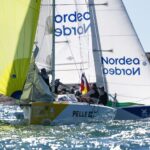
Ellie Driver is on a determined path toward the Vendée Globe 2032. Not in a rush. Not chasing shortcuts. But committing to the long game.
In this episode of the Gybe Set Sailor Stories Podcast, Ellie shares how growing up in North Wales, racing Optimists and 420s, followed by offshore with her dad, laid the foundation for an ambition that stretches more than a decade into the future.
Tune in for a conversation about mental endurance, unconventional family sailing, adventure, engineering, and what it really takes to prepare for one of the toughest races on the planet.
Chapters
00:00 Introduction to Ellie and Her Journey
03:11 Transitioning to Offshore Sailing
04:44 Racing Double Handed & Offshore around the UK
07:23 The Ups and Downs of Family Racing
09:10 The Figaro Class and Towards Vendée Globe 2032
14:03 Lorient La Base: The Importance of Training and Environment
16:59 The Uniqueness of the French Offshore Sailing System
19:52 Adapting To Life in France
22:27 Solo vs. Double Handed Racing
24:06 La Transat Paprec
30:03 The Challenges of La Solitaire du Figaro Paprec
33:00 Navigating Alone: The Solo Experience
37:24 The Role of STEM & Engineering
45:03 Goals and Ambitions Ahead
47:27 Inspiring the Next Generation and A Final Remark
From Dinghies to Offshore Miles
Ellie’s sailing story began at Triada Bay Sailing Club in Anglesey, where she raced Optimists and 420s and travelled internationally with her father. Like many young sailors, her world initially revolved around start lines, mark roundings, and short-course tactics.
But when the pandemic paused dinghy racing, Ellie pivoted.
Instead of waiting for racing to return, she stepped offshore — onto her family’s Sunfast 3300, Chili Pepper. What started as family sailing quickly turned into something far more serious. Double handed racing demands sleep management, weather strategy, sail changes in the dark, and constant decision-making under fatigue.

© Rick Tomlinson / www.rick-tomlinson.com
This wasn’t weekend cruising. It was apprenticeship by immersion. Family sailing, in Ellie’s world, became a high-performance training ground.
The Race That Changed Everything
One of the defining chapters in her journey was the Round Britain and Ireland Race, where Ellie became the youngest skipper ever to compete.
Fourteen days offshore changes you. It forces you to pace yourself, manage your energy, and zoom out. You cannot win that race in a single tactical move. You survive it by thinking long term.

“The race isn’t over until you cross the finish line.”
That lesson now underpins everything she does. With her eyes and mind set on the Vendée Globe 2032 as the finish line, this is a long-term strategy built on endurance.
Unconventional Family Sailing
Sailing with a parent under pressure can either fracture or fortify a relationship. For Ellie and her father, it did both – and ultimately strengthened it.

Offshore racing together meant arguments, exhaustion, shared decision-making and complete trust. It meant learning to communicate when sleep-deprived and cold. It meant discovering that resilience is often built in the uncomfortable moments.
Ellie’s and her father’s dynamic shaped her approach to performance. Calm under pressure. Honest conversations. Reset and move forward.
Moving to France and Choosing the Long Game
Deeply connected to family and friends, Ellie still made the bold decision to move to France – the epicenter of professional offshore sailing.
Lorient is where Vendée Globe campaigns are forged. And if 2032 is the target, the Figaro class is the proving ground.

Through constant training, La Solitaire du Figaro and the Transat Paprec, Ellie is building mileage, sharpening race craft, and immersing herself in one of the most competitive offshore environments in the world. The Figaro circuit is relentless. Back-to-back stages. Tight competition. And no room for complacency. It is, historically, the breeding ground for Vendée Globe skippers.

Here’s the thing; you don’t just show up at the start line of the Vendée Globe. You have to grow into it.
Engineering, WES and Representation
Ellie’s ambitions extend beyond racing results.
Through her work with WES (the Women’s Engineering Society), she highlights the technical intelligence behind offshore sailing. Weather models, structural loads, systems management, and onboard problem-solving are as critical as physical endurance.

Ellie means that engineering is embedded in every decision offshore. By speaking openly about the technical side of the sport, she hopes to inspire more young women to see engineering as accessible, powerful, and relevant – whether in a classroom, a boatyard, or mid-Atlantic.
The Mental Side of Offshore Racing
Long races are less about bursts of speed and more about sustained clarity.
Fatigue management. Emotional regulation. Confidence in your decisions when the fleet disappears over the horizon. The understanding that performance fluctuates – but belief does not.

“I had left it all on that race course.”
Ellie speaks about pacing, about not chasing immediate results, and about zooming out when things go wrong. The Vendée Globe is a three-month solo race around the planet. Preparing for that starts years earlier, in how you frame setbacks.
Trusting the long game is disciplined.

Takeaways
- Ellie’s journey began in dinghy sailing before transitioning offshore.
- Family racing can be both challenging and transformative.
- The Figaro class remains a crucial stepping stone toward elite solo racing.
- Mental endurance is as important as physical strength offshore.
- Engineering knowledge sharpens decision-making at sea.
- Long-term vision outperforms short-term impatience.
- Vendée Globe 2032 is the destination — but the process is the real story.
Ellie’s story is still unfolding. But already it offers a powerful reminder: the biggest dreams aren’t built on a single breakthrough moment. They are built on daily decisions and long-term determination and strategy.
Follow Ellie at:
www.elliedriverracing.com
Instagram: @elliedriverracing